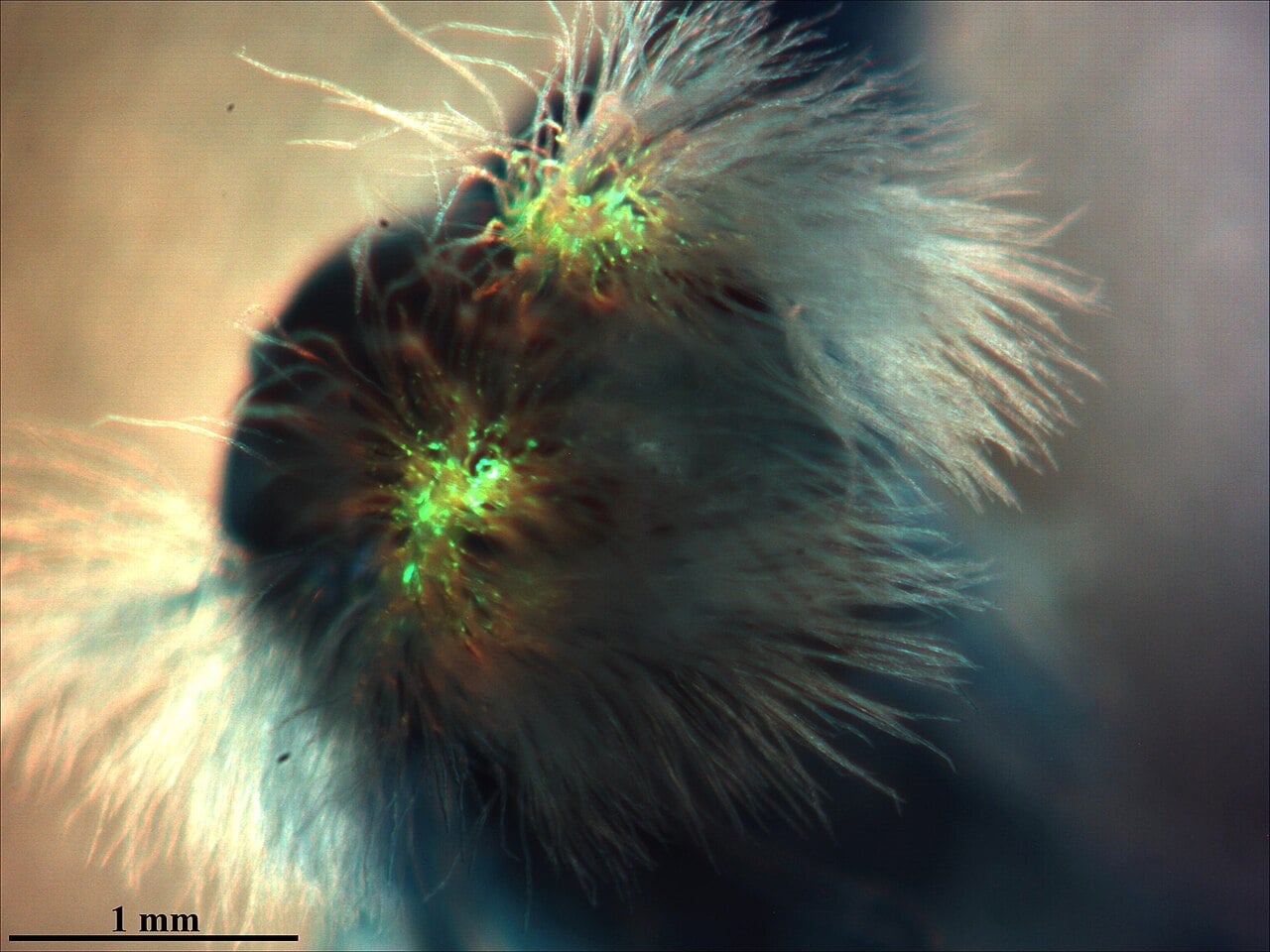
Buzzer / Midge
Chironomidae sp. — Buzzer, Duck Fly, Blood Worm (larva), Pupa
The most important insect of all on stillwaters — year-round, in every month, on every productive lake and reservoir in Europe.
Midges & Diptera — Diptera
Chironomidae
Body 5–16 mm (highly variable) / Hook size 10–18
All day, with peaks morning & evening
Stillwaters, reservoirs, lochs, and slow river glides
Lifecycle
The Chironomidae family spans thousands of species, varying from 5 mm to over 15 mm. The larva (Bloodworm) lives buried in fine lake sediment. The larval stage spans months; midge larvae are the dominant invertebrates in lake sediments. Pupation occurs quickly, and the pupa ascends through the water column, often hanging just below or in the surface film before hatching.
Peak months
If there is one group of insects that an angler must understand before fishing any European stillwater, it is the midges. On reservoirs, lochs, and loughs, midge pupae suspended in the surface film account for the majority of a stillwater trout's annual diet. The Buzzer is not glamorous fishing but the angler who masters it will catch more fish on more days than any other stillwater technique.
Fishing tips
Static Buzzer on Still Water
The classic technique: a floating or intermediate line with a long (18+ ft) fluorocarbon leader and three or four Buzzer patterns spaced 3–4 ft apart at different depths. Cast to rising fish or to known feeding areas, allow the rig to settle, and fish it completely static.
Fly patterns
Other hatches
TerrestrialsBlack Gnat
Bibio johannisA ubiquitous summer terrestrial — the Black Gnat is available to fish on virtually every European river when other hatches are quiet.
MayfliesBlue Winged Olive
Serratella ignitaThe most important small olive on British and European chalk streams — reliable, widespread, and technically demanding.
MayfliesCaenis
Caenis horariaThe infuriatingly tiny mayfly that hatches in such vast numbers that fish refuse to look at anything larger — the tying and presentation challenge of a lifetime.
CaddisfliesCinnamon Sedge
Limnephilus lunatusA common summer evening caddis found across Europe — its reliable evening hatches from June to August provide consistent dry fly fishing.
TerrestrialsCommon Cockchafer
Melolontha melolonthaDuring evening flights, heavy beetles fall onto water and become high-value mouthfuls for surface-feeding fish.