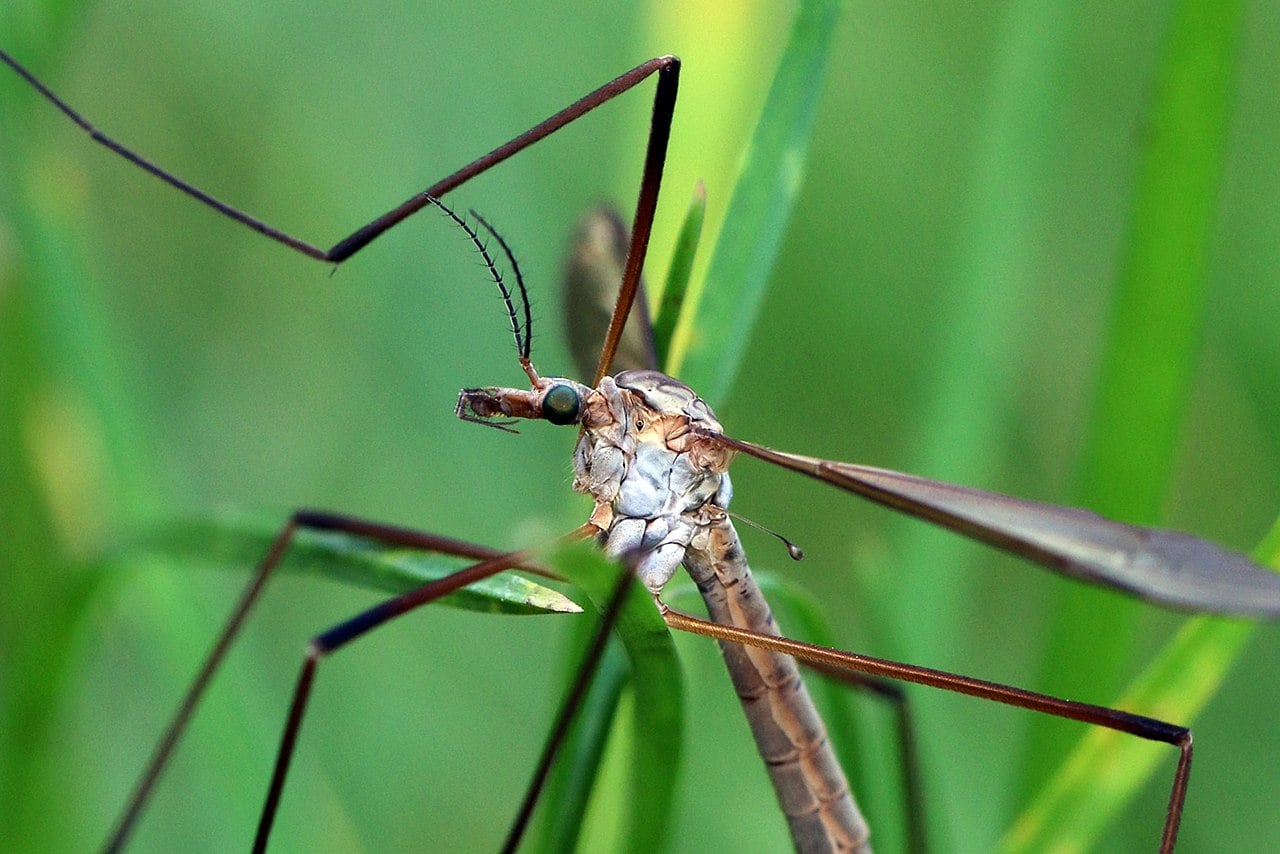
Crane Fly
Tipula spp. — Daddy Long Legs, Daddy, Leatherjacket (larva)
When autumn daddy-long-legs blow onto rivers and lakes in August and September, trout abandon all caution for these clumsy, irresistible mouthfuls.
Midges & Diptera — Diptera
Tipulidae
Body 20–30 mm / Hook size 8–12
All day when windy (blown terrestrial)
Rivers and stillwaters adjacent to damp grassland
Lifecycle
The Crane Fly is a terrestrial insect whose aquatic relevance is entirely accidental — the adult does not hatch from water but from the soil. The larva (the leatherjacket) lives in soil for up to 11 months feeding on plant roots. The adult crane fly is a poor flier, and in late summer and autumn, numbers of adults are blown from bankside meadows onto the water surface.
Peak months
Few flies inspire more excitement in trout than a flailing crane fly. A large 'Daddy' pattern is a confident, aggressive offering that provokes equally confident, aggressive responses. Even the largest and most wary wild brown trout will cross metres of open water to take a well-presented crane fly.
Fishing tips
Reading the Wind
Position yourself on the downwind bank or shore — this is where cranefly will accumulate on the water surface. On a windy August day, walk the bank before fishing to observe where daddies are landing and where fish are rising.
Fly patterns
Other hatches
TerrestrialsBlack Gnat
Bibio johannisA ubiquitous summer terrestrial — the Black Gnat is available to fish on virtually every European river when other hatches are quiet.
MayfliesBlue Winged Olive
Serratella ignitaThe most important small olive on British and European chalk streams — reliable, widespread, and technically demanding.
Midges & DipteraBuzzer / Midge
Chironomidae sp.The most important insect of all on stillwaters — year-round, in every month, on every productive lake and reservoir in Europe.
MayfliesCaenis
Caenis horariaThe infuriatingly tiny mayfly that hatches in such vast numbers that fish refuse to look at anything larger — the tying and presentation challenge of a lifetime.
CaddisfliesCinnamon Sedge
Limnephilus lunatusA common summer evening caddis found across Europe — its reliable evening hatches from June to August provide consistent dry fly fishing.