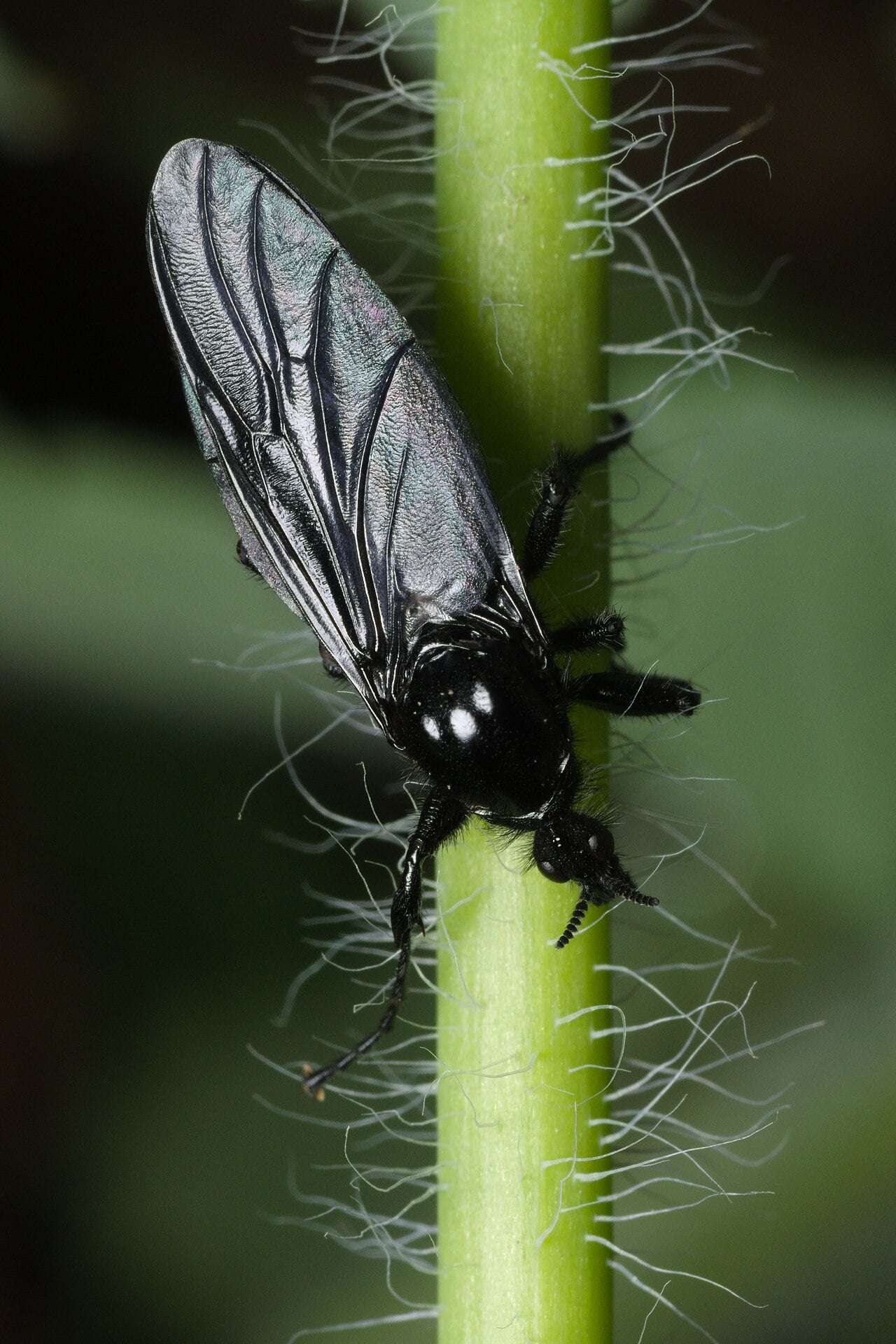
Hawthorn Fly
Bibio marci — St Mark's Fly, Hawthorn, Bibio
Named for St Mark's Day (25 April), the Hawthorn Fly arrives like clockwork in late April — a short, intense window of spectacular surface feeding.
Dragonflies — Odonata
Bibionidae
Body 10–14 mm / Hook size 12–14
All day when present (terrestrial)
Any water adjacent to hawthorn, blackthorn, and hedgerow vegetation
Lifecycle
The Hawthorn Fly is entirely terrestrial — its larva lives in the soil feeding on decaying plant material and grass roots. The adult emerges synchronously from hawthorn hedgerows in April and May, typically appearing within a few days either side of St Mark's Day (25 April).
Peak months
The Hawthorn Fly is the fly fisher's most reliable early-season terrestrial. Trout, grayling, and chub that have been confined largely to sub-surface feeding through the winter suddenly encounter a large, helpless black fly struggling on the surface.
Fishing tips
Follow the Hedgerow
Fish the bank adjacent to hawthorn and blackthorn hedgerows first. Adults blown onto the water congregate along windward banks. Look for the distinctive black flies struggling on the surface and identify rising fish nearby.
Fly patterns
Other hatches
TerrestrialsBlack Gnat
Bibio johannisA ubiquitous summer terrestrial — the Black Gnat is available to fish on virtually every European river when other hatches are quiet.
MayfliesBlue Winged Olive
Serratella ignitaThe most important small olive on British and European chalk streams — reliable, widespread, and technically demanding.
Midges & DipteraBuzzer / Midge
Chironomidae sp.The most important insect of all on stillwaters — year-round, in every month, on every productive lake and reservoir in Europe.
MayfliesCaenis
Caenis horariaThe infuriatingly tiny mayfly that hatches in such vast numbers that fish refuse to look at anything larger — the tying and presentation challenge of a lifetime.
CaddisfliesCinnamon Sedge
Limnephilus lunatusA common summer evening caddis found across Europe — its reliable evening hatches from June to August provide consistent dry fly fishing.