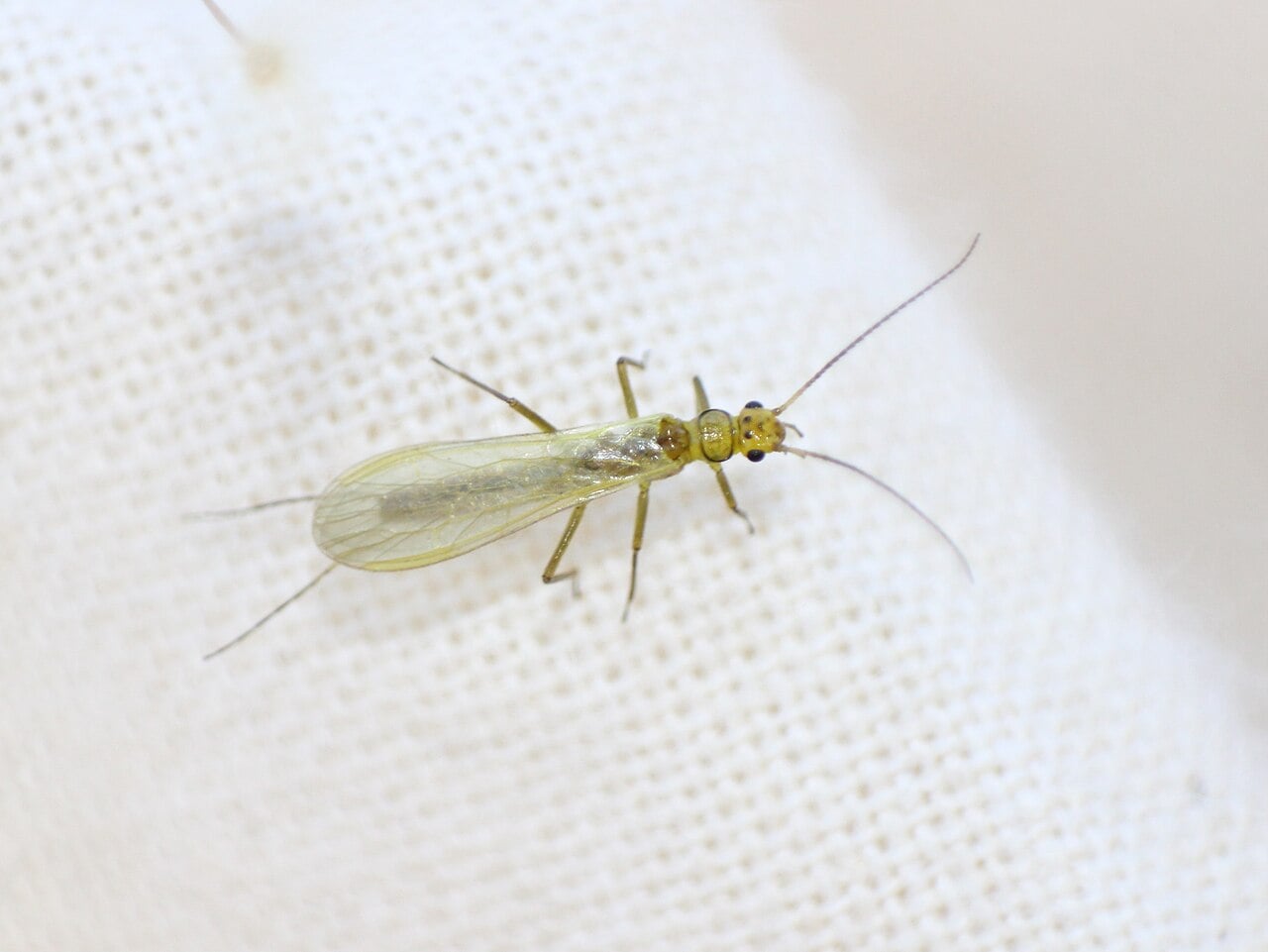
Yellow Sally
Isoperla grammatica — Small Yellow Stone, Willow Fly
A bright, cheerful little stonefly — the Yellow Sally's summer hatches on chalk streams and river riffles reliably bring trout and grayling to the dry fly.
Stoneflies — Plecoptera
Perlodidae
Body 8–11 mm / Hook size 14–16
Morning to afternoon
Chalk streams, clear gravel rivers, and moorland streams
Lifecycle
The Yellow Sally nymph is a predator, hunting smaller invertebrates between the stones and rivers of fast-flowing river beds. Like all stoneflies, the Yellow Sally does not hatch in the water. The mature nymph crawls onto exposed rocks, weed stems, or bankside vegetation and the adult emerges on the dry surface.
Peak months
The Yellow Sally is one of the most delightful surprises of early summer fly fishing. On a warm June afternoon, suddenly noticing bright yellow stoneflies riding the current in twos and threes, and seeing grayling and trout rising to them, is a genuinely exciting discovery.
Fishing tips
Upstream Dry in Riffles
A size 14–16 Yellow Sally dry fly — yellow hackle, yellow body, either deer hair or elk hair wings — cast upstream into fast riffles where stoneflies are walking on the surface.
Fly patterns
Other hatches
TerrestrialsBlack Gnat
Bibio johannisA ubiquitous summer terrestrial — the Black Gnat is available to fish on virtually every European river when other hatches are quiet.
MayfliesBlue Winged Olive
Serratella ignitaThe most important small olive on British and European chalk streams — reliable, widespread, and technically demanding.
Midges & DipteraBuzzer / Midge
Chironomidae sp.The most important insect of all on stillwaters — year-round, in every month, on every productive lake and reservoir in Europe.
MayfliesCaenis
Caenis horariaThe infuriatingly tiny mayfly that hatches in such vast numbers that fish refuse to look at anything larger — the tying and presentation challenge of a lifetime.
CaddisfliesCinnamon Sedge
Limnephilus lunatusA common summer evening caddis found across Europe — its reliable evening hatches from June to August provide consistent dry fly fishing.